
CELEBRITY
🚨 YOU’RE FIRED: The woman that doxxed ICE Agent Jonathan Ross, lost her job and faces arrest. She thought it was innocent to post a video sharing that he lived on her street and giving his street address.

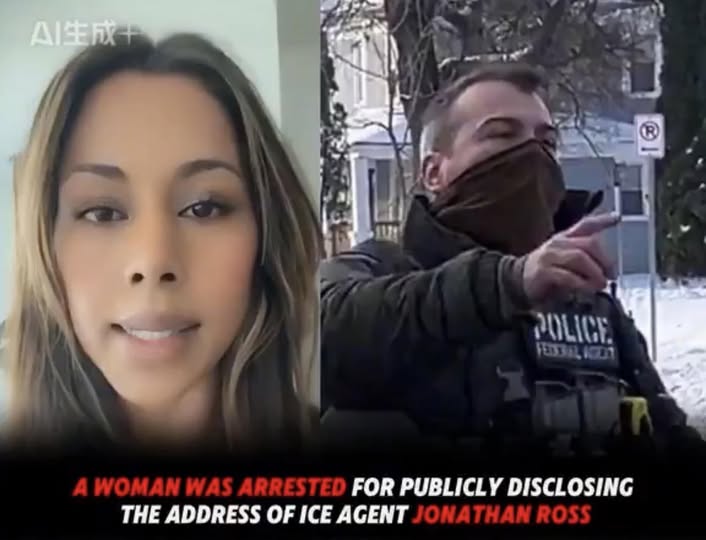
A Minnesota woman has been fired from her job and arrested after publicly disclosing the home address of ICE agent Jonathan Ross, the federal officer identified in the fatal shooting of Renee Nicole Good earlier this month — an incident that already sparked nationwide protests and political turmoil.
The woman, identified in media reports as Sara Larson, drew national attention after posting a video on social media in which she named Ross’s neighborhood and appeared to invite others to gather at his residence to express outrage.
Viral Video Leads to Serious Consequences
In the now-removed video, Larson claimed she lived near Ross’s home in Chaska, Minnesota, and encouraged viewers to “circle around” and “make him uncomfortable,” suggesting protest activity around the agent’s house.
While she stopped short of directly posting a street address, federal authorities and legal analysts say her comments amounted to doxing — publicly disclosing personal information for the purpose of targeting an individual — which can prompt criminal charges when tied to threats or harassment.
Shortly after the video went viral, Larson began receiving threats herself and went to police with concerns about her own safety, according to social media posts.
Employer Cuts Ties
Her employer, EastWest Acupuncture, released a statement confirming that Larson had been fired from her position. The business emphasized that her actions did not reflect its values or policies, and that the company strives to maintain a safe, respectful environment for clients and staff.
The statement noted that the controversial video and the online reaction it generated “have been very difficult for those affected,” including employees and their families, prompting the decision to separate from Larson.
In addition to losing her job, Larson was arrested by local law enforcement on charges related to doxing and inciting harassment. While official court records have not yet been released, criminal legal experts say prosecutors will likely pursue charges that could include unlawful dissemination of personal information and soliciting intimidation.
Civil liberties advocates warn that even well-intended outrage can cross legal lines when it targets individuals’ homes or private information, regardless of the broader political context. “There’s a difference between protesting public policy and encouraging harassment of private citizens,” one expert noted.

A California federal judge hit the Trump administration with a scathing order to notify thousands of detained immigrants nationwide that they can join a lawsuit demanding either a hearing or immediate release.

Trump DOJ takes down thousands of Epstein docs after admitting it exposed victims

The Department of Justice was reportedly caught deleting evidence that sex trafficker Ghislaine Maxwell was in possession of three interviews that could possibly be used as blackmail over President Donald Trump and were not released to the general public.

Trump owes the Supreme Court an apology—to the Justices he smeared on Friday and the institution itself. He doubtless won’t offer one, but his rant in response to his tariff defeat at the Court was arguably the worst moment of his Presidency.

Former President Bill Clinton and former Secretary of State Hillary Clinton are in a standoff with House Oversight Committee Chair James Comer, R-Ky., over testimony the panel is seeking in its investigation into the late convicted sex offender Jeffrey Epstein.

Former President Bill Clinton and former Secretary of State Hillary Clinton are set to testify to the House Oversight Committee for its investigation into Jeffrey Epstein, a committee spokeswoman says.

Trump refuses to apologize after posting racist meme of the Obamas

In a rare move, the White House recently took down a racist post from one of President Trump’s social media accounts. Extremism researchers say it fits a pattern of mainstreaming extremist ideas.

Just hours after the federal judges in the Eastern District of Virginia appointed a new interim US attorney to replace Trump loyalist Lindsey Halligan, the administration said he is fired.

President Trump is asking the federal government for billions of dollars in damages, putting his own Justice Department on the spot and creating an unprecedented ethical morass.

A federal judge in Illinois quickly issued a restraining order after the Trump administration slashed more than $600 million in CDC grants
