
CELEBRITY
🚨 JB Pritzker just sent Trump an invoice 💸 $8.6 BILLION — demanding it back for Illinois families after the tariff ruling. When the courts say it was illegal, that’s not “trade policy”… that’s a tab. Pay up. 🧾⚖️ Who agrees?

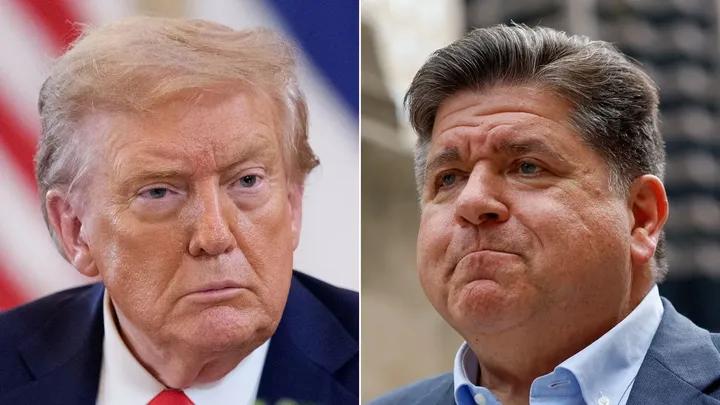
The political fallout from the recent tariff ruling took a sharp new turn when JB Pritzker made a move that stunned both allies and critics.
Standing before reporters in Chicago, the governor held up what looked like an oversized invoice.
At the top: $8.6 BILLION — Due Immediately.
The recipient: Donald Trump.
“This isn’t abstract policy,” Pritzker said, tapping the paper. “This is money Illinois families and businesses already paid. If the courts say those tariffs were illegal, then that money shouldn’t stay gone.”
The demand comes days after the Supreme Court of the United States ruled that the administration’s sweeping import tariffs overstepped executive authority. Legal experts said the decision could open the door to challenges from states and companies seeking reimbursement for losses.
Illinois moved first.
According to state analysts, manufacturers, farmers, and small businesses across Illinois paid billions more for imported materials and goods during the tariff period. Those costs, they argue, trickled down to everyday families through higher prices on groceries, appliances, and construction supplies.
Pritzker framed it bluntly.
“When something’s ruled unlawful, it’s not ‘tough trade strategy.’ It’s a bill someone else got stuck paying,” he said. “And we want it back.”
The symbolic invoice quickly went viral online, shared as both a protest and a legal warning shot. Behind the scenes, state attorneys are reportedly exploring formal claims to recover funds, either through lawsuits or federal negotiations.
Business owners welcomed the move.
A soybean exporter from central Illinois called the tariffs “a punch we never recovered from.” A Chicago factory manager said his company froze hiring because costs jumped overnight. “If there’s a chance to get some of that back,” he said, “why wouldn’t the state fight for it?”

A California federal judge hit the Trump administration with a scathing order to notify thousands of detained immigrants nationwide that they can join a lawsuit demanding either a hearing or immediate release.

Trump DOJ takes down thousands of Epstein docs after admitting it exposed victims

The Department of Justice was reportedly caught deleting evidence that sex trafficker Ghislaine Maxwell was in possession of three interviews that could possibly be used as blackmail over President Donald Trump and were not released to the general public.

Trump owes the Supreme Court an apology—to the Justices he smeared on Friday and the institution itself. He doubtless won’t offer one, but his rant in response to his tariff defeat at the Court was arguably the worst moment of his Presidency.

Former President Bill Clinton and former Secretary of State Hillary Clinton are in a standoff with House Oversight Committee Chair James Comer, R-Ky., over testimony the panel is seeking in its investigation into the late convicted sex offender Jeffrey Epstein.

Former President Bill Clinton and former Secretary of State Hillary Clinton are set to testify to the House Oversight Committee for its investigation into Jeffrey Epstein, a committee spokeswoman says.

Trump refuses to apologize after posting racist meme of the Obamas

In a rare move, the White House recently took down a racist post from one of President Trump’s social media accounts. Extremism researchers say it fits a pattern of mainstreaming extremist ideas.

Just hours after the federal judges in the Eastern District of Virginia appointed a new interim US attorney to replace Trump loyalist Lindsey Halligan, the administration said he is fired.

President Trump is asking the federal government for billions of dollars in damages, putting his own Justice Department on the spot and creating an unprecedented ethical morass.

A federal judge in Illinois quickly issued a restraining order after the Trump administration slashed more than $600 million in CDC grants
