
CELEBRITY
“SHOCKWAVE IN AMERICA! Supreme Court Takes Aim at Birthright Citizenship— will every baby born in America still be a citizen, or could deportation starts at birth? Find out

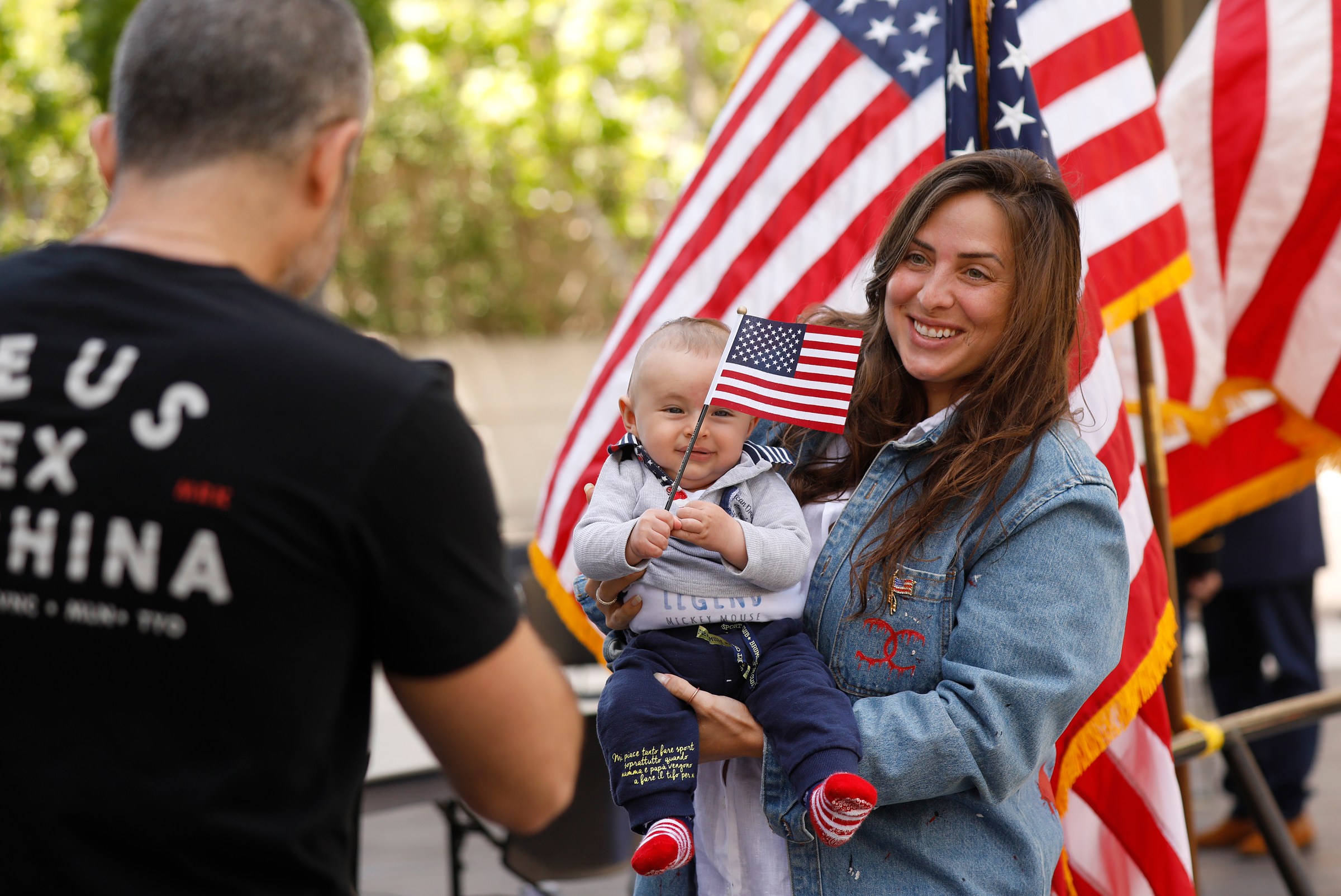
America woke up this week to a political earthquake that shook hospital rooms, courtrooms, and living rooms across the nation.
For 157 years, the answer to one simple question was automatic:
A baby born on American soil is an American citizen.
Full stop. No paperwork. No exceptions. No debates.
But that bedrock rule—the Fourteenth Amendment’s promise of birthright citizenship—is suddenly under review by the highest court in the country. And the possibility that the Supreme Court could change what happens inside a delivery room has sent the nation spiraling into uncertainty, fear, and fierce debate.
—
A Nation Holds Its Breath Inside a Hospital Room
Picture the scene:
A fluorescent light hums.
A newborn lets out its very first cry.
A nurse holds a birth certificate form the same way nurses have held it for more than a century.
For decades, filling that form out was routine.
Baby born here? American citizen.
But now, with the Supreme Court taking up a case targeting birthright citizenship, that nurse’s pen suddenly feels heavier. Americans are asking questions no one imagined would return:
Will every baby born here still be American?
Or could deportation—unthinkable until now—start at birth?
—
A 157-Year Rule Suddenly on Trial
At the center of the case is the meaning of five words from the Constitution:
“Subject to the jurisdiction thereof.”
Since 1868, the answer has been clear.
If a baby is born in the U.S. and the law can reach the parents—arrest them, try them, detain them, deport them—then the child is a citizen. The Supreme Court confirmed this in 1898 in a landmark decision involving Wong Kim Ark, a child born in San Francisco to Chinese parents who could not themselves become citizens.
For more than a century, that ruling has held firm.
But in 2025, everything changed.
—
The Executive Order That Sparked the Firestorm
On January 20, 2025, President Trump signed Executive Order 14,160, directing federal agencies to deny citizenship documentation to children born in the U.S. to undocumented immigrants and even some legal visa holders.
Every federal court to review the order struck it down.
Now the Supreme Court has decided to take the case—putting the future of birthright citizenship squarely in its hands.
For the first time in generations, the question isn’t abstract or political.
It is personal.
It is about babies.
Families.
Hospitals.
Birth certificates.
Belonging.
—
The Heart of the Battle: Who Draws the Circle of Belonging?
This is not the first time America has faced this question. In 1866, while drafting the Fourteenth Amendment, senators openly debated whether children of Chinese laborers, Roma families, and immigrants who would “never be white” would be citizens.
They were asked directly:
Are these children Americans?
The answer was one word.
Undoubtedly.
It was a moral line drawn in the sand by men who had lived through slavery, Dred Scott, and violence so brutal it reshaped their view of the Constitution. They understood what happened when government officials were allowed to decide who counted as a person.
They wrote “all persons”—not to leave room for exceptions, but to slam the door on them forever.
—
But Now, That Door Is Cracking Open
Supporters of the executive order argue that undocumented immigrants aren’t fully under U.S. jurisdiction and that their children therefore shouldn’t automatically receive citizenship.
Critics argue that the government arrests, detains, prosecutes, and deports undocumented immigrants every day—clear proof that they are under U.S. jurisdiction. And they insist that overturning 127 years of legal precedent risks reviving the same exclusionary logic that once denied citizenship to Black Americans.
Either way, the consequences could be enormous:
Two babies born on the same hospital floor—one to a citizen mother, one to an undocumented mother—could receive different legal identities.
Families who have lived quietly for years could suddenly find their U.S.-born children unrecognized.
Hospitals could become legal battlegrounds.
“American” could become a question, not a birthright.

A California federal judge hit the Trump administration with a scathing order to notify thousands of detained immigrants nationwide that they can join a lawsuit demanding either a hearing or immediate release.

Trump DOJ takes down thousands of Epstein docs after admitting it exposed victims

The Department of Justice was reportedly caught deleting evidence that sex trafficker Ghislaine Maxwell was in possession of three interviews that could possibly be used as blackmail over President Donald Trump and were not released to the general public.

Trump owes the Supreme Court an apology—to the Justices he smeared on Friday and the institution itself. He doubtless won’t offer one, but his rant in response to his tariff defeat at the Court was arguably the worst moment of his Presidency.

Former President Bill Clinton and former Secretary of State Hillary Clinton are in a standoff with House Oversight Committee Chair James Comer, R-Ky., over testimony the panel is seeking in its investigation into the late convicted sex offender Jeffrey Epstein.

Former President Bill Clinton and former Secretary of State Hillary Clinton are set to testify to the House Oversight Committee for its investigation into Jeffrey Epstein, a committee spokeswoman says.

Trump refuses to apologize after posting racist meme of the Obamas

In a rare move, the White House recently took down a racist post from one of President Trump’s social media accounts. Extremism researchers say it fits a pattern of mainstreaming extremist ideas.

Just hours after the federal judges in the Eastern District of Virginia appointed a new interim US attorney to replace Trump loyalist Lindsey Halligan, the administration said he is fired.

President Trump is asking the federal government for billions of dollars in damages, putting his own Justice Department on the spot and creating an unprecedented ethical morass.

A federal judge in Illinois quickly issued a restraining order after the Trump administration slashed more than $600 million in CDC grants
