
CELEBRITY
President Trump is pressuring Senate Republicans to oppose a resolution that would limit his ability to conduct further military action related to Venezuela after U.S. troops captured Nicolás Maduro in a surprise raid — highlighting intra-party tension over military oversight.

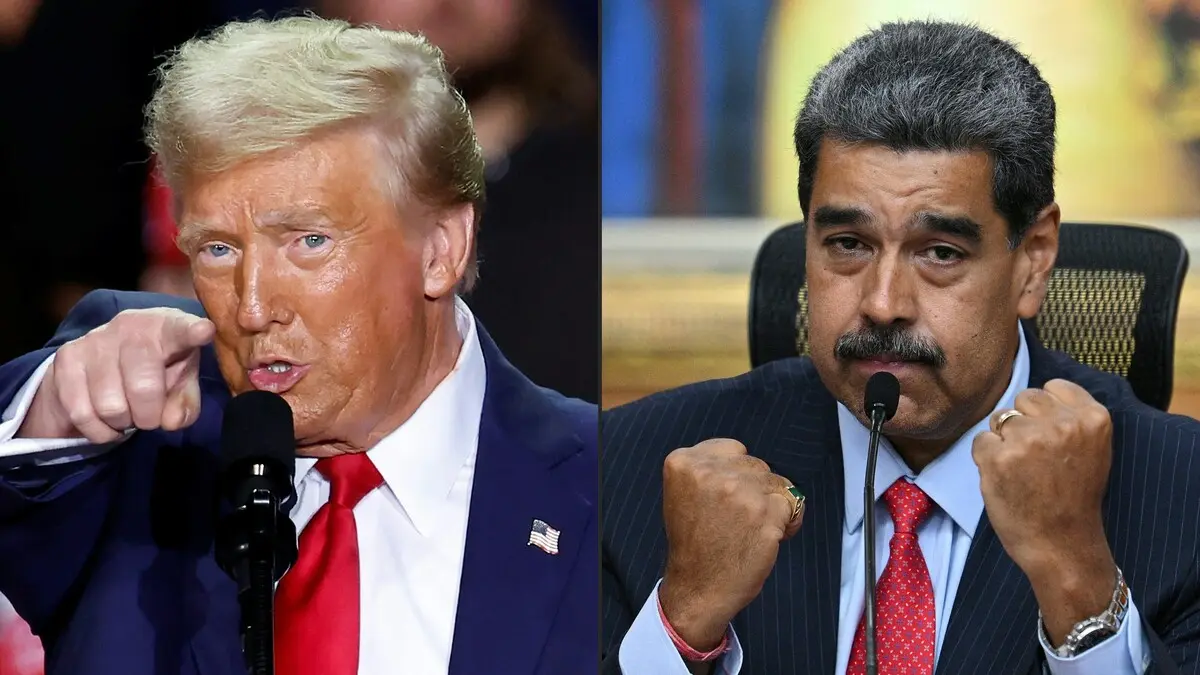
President Donald Trump is intensifying his push to rally Senate Republicans against a growing bipartisan effort in Congress to rein in his authority to pursue further military actions against Venezuela — a debate sharply escalated after U.S. forces conducted a surprise raid that captured Venezuelan leader Nicolás Maduro earlier this month.
The Senate is poised this week to vote on a war powers resolution designed to limit the president’s ability to launch additional military strikes or operations involving Venezuela without explicit congressional approval — a significant assertion of legislative oversight over foreign engagements.
In recent days Trump has publicly and privately urged Senate Republicans to oppose the measure, portraying it as a threat to national security and to his authority as commander in chief. Speaking at a campaign-style rally in Michigan, the president blasted lawmakers who supported advancing the resolution, calling the effort misguided and criticizing Republican senators who joined Democrats on the procedural vote.
Background: The Maduro Raid and Rising Tensions
The broader debate stems from an extraordinary U.S. military operation in early January that saw special-operations forces capture Maduro in Caracas during a nighttime raid. The Trump administration characterized the action as a legally justified law-enforcement mission and has signaled broader ambitions in the region, including strategic interest in Venezuelan oil assets and government transition.
In response, Senate Democrats — joined by a small group of Republicans — pushed a war powers resolution that successfully cleared an initial hurdle last week, advancing on a 52-47 vote with support from five GOP senators who said Congress must reassert its constitutional role in authorizing military action.
This rare bipartisan step underscores unease among some Republican lawmakers about the scope and direction of Trump’s Venezuela policy, particularly after Maduro’s capture and the administration’s public statements about long-term U.S. involvement.
The Stakes: Oversight vs. Executive Authority
Supporters of the resolution argue that the Constitution gives Congress — not the president alone — the authority to decide when and how U.S. forces are used abroad. They cite the War Powers Resolution of 1973, which sought to ensure that presidents consult and, where necessary, obtain approval from lawmakers before engaging in prolonged hostilities.
Republican leadership and the White House counter that such measures undermine the president’s ability to act swiftly in defense of national interests, especially when confronting regimes deemed hostile or destabilizing. Senate Majority Leader John Thune and other GOP allies have defended Trump’s actions, suggesting the measure is unnecessary because there’s no ongoing declared conflict and U.S. forces are not engaged in traditional hostilities.

A California federal judge hit the Trump administration with a scathing order to notify thousands of detained immigrants nationwide that they can join a lawsuit demanding either a hearing or immediate release.

Trump DOJ takes down thousands of Epstein docs after admitting it exposed victims

The Department of Justice was reportedly caught deleting evidence that sex trafficker Ghislaine Maxwell was in possession of three interviews that could possibly be used as blackmail over President Donald Trump and were not released to the general public.

Trump owes the Supreme Court an apology—to the Justices he smeared on Friday and the institution itself. He doubtless won’t offer one, but his rant in response to his tariff defeat at the Court was arguably the worst moment of his Presidency.

Former President Bill Clinton and former Secretary of State Hillary Clinton are in a standoff with House Oversight Committee Chair James Comer, R-Ky., over testimony the panel is seeking in its investigation into the late convicted sex offender Jeffrey Epstein.

Former President Bill Clinton and former Secretary of State Hillary Clinton are set to testify to the House Oversight Committee for its investigation into Jeffrey Epstein, a committee spokeswoman says.

Trump refuses to apologize after posting racist meme of the Obamas

In a rare move, the White House recently took down a racist post from one of President Trump’s social media accounts. Extremism researchers say it fits a pattern of mainstreaming extremist ideas.

Just hours after the federal judges in the Eastern District of Virginia appointed a new interim US attorney to replace Trump loyalist Lindsey Halligan, the administration said he is fired.

President Trump is asking the federal government for billions of dollars in damages, putting his own Justice Department on the spot and creating an unprecedented ethical morass.

A federal judge in Illinois quickly issued a restraining order after the Trump administration slashed more than $600 million in CDC grants
