
CELEBRITY
Canada Quietly Cuts the U.S. Out as Trump’s Tariff Threat Loses Its Bite

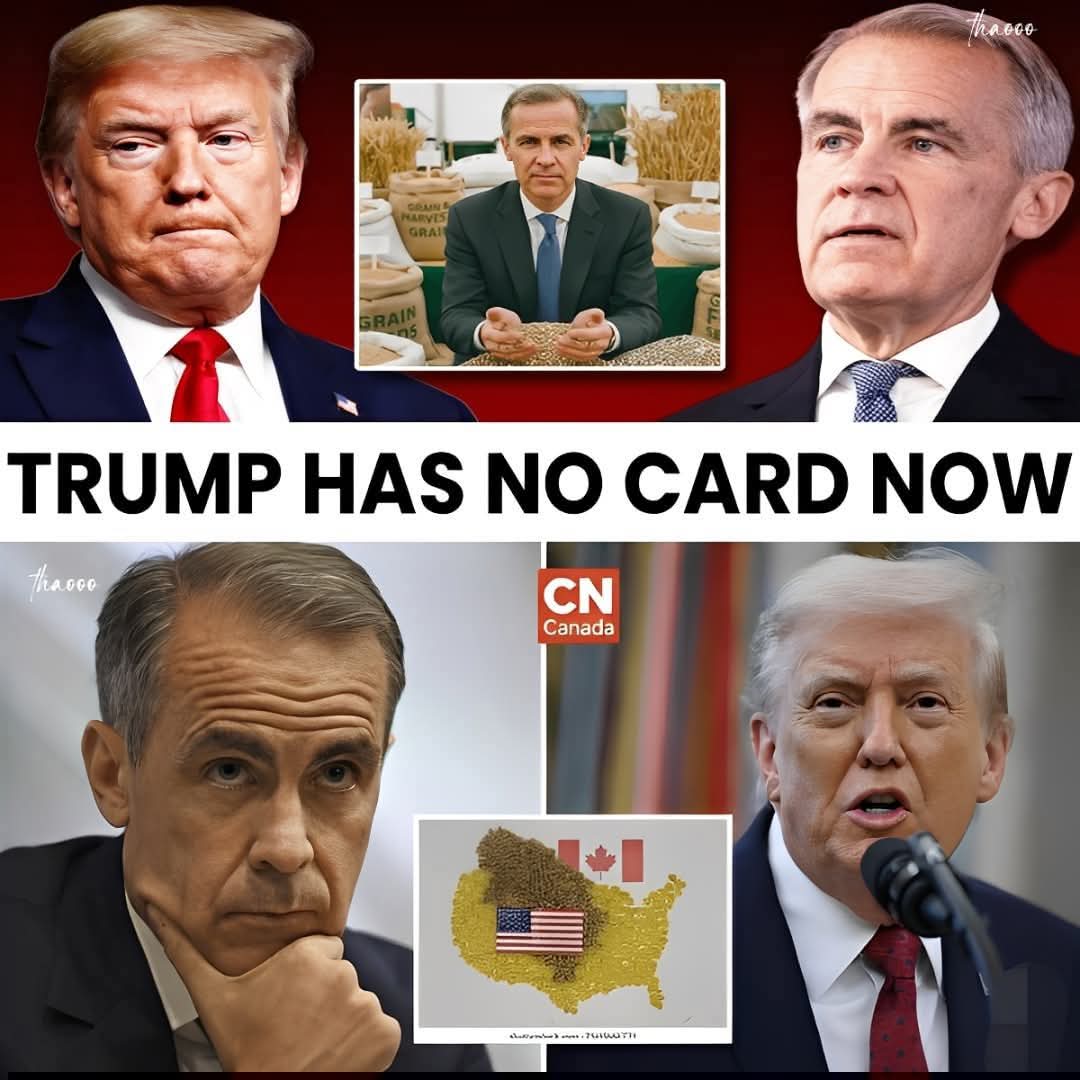
🚨 1 MIN AGO: CANADA QUIETLY CUTS THE U.S. OUT — TRUMP’S TARIFF THREAT JUST COLLAPSED A
Saskatchewan farmer stared at his phone in disbelief. Trump’s tariff threat had just vanished — not because Washington blinked, but because Canadian grain and fertilizer no longer need a single U.S. port, rail line, or fee-collecting middleman. Behind the scenes, Canada has been executing a quiet reroute. Exports that once flowed south are now moving another way — faster, cheaper, and completely outside U.S. control. Insiders say the shift is only beginning, with entire supply chains being redesigned to bypass America altogether. What was meant to pressure Canada may have triggered something far bigger. As new routes lock in and contracts snap into place, U.S. leverage appears to be shrinking by the day. 👇 What Canada changed — and why Washington may not be able to stop it — is unfolding below 👇
A Saskatchewan farmer stood in the middle of his yard, phone in hand, staring at the numbers that no longer made sense. The tariff threat that had loomed for weeks—meant to squeeze Canadian producers and force concessions—had suddenly evaporated. Not because Washington backed down, but because Canada had already moved on.
Behind the scenes, Ottawa and provincial trade authorities have been executing a quiet but consequential shift: Canadian grain, potash, and fertilizer exports no longer depend on U.S. ports, rail corridors, or fee-collecting intermediaries. What once flowed south by default is now being rerouted east and west, locking in alternative pathways that place the United States entirely outside the equation.
According to industry insiders, Canada has expanded capacity at key Atlantic ports, deepened Pacific shipping arrangements, and fast-tracked rail links that move commodities directly to overseas markets. New contracts with European and Asian buyers are being finalized, many of them structured specifically to avoid U.S. infrastructure and jurisdiction. The result is a supply chain that is not only independent of American control, but in some cases faster and cheaper.
For years, U.S. leverage rested on geography. Canadian exports often had little choice but to pass through American rail lines, terminals, or ports, giving Washington a pressure point during trade disputes. That leverage is now eroding. As rerouted shipments prove reliable, exporters are growing comfortable with a system that treats the U.S. as optional rather than essential.
“What was supposed to be a pressure tactic may have accelerated a permanent realignment,” said one logistics executive familiar with the changes. “Once these routes are established and contracts are signed, there’s very little incentive to go back.”
The implications extend beyond agriculture. Analysts say the same model could be applied to energy, critical minerals, and manufactured goods, reshaping North American trade patterns that have been in place for decades. Each new route reduces U.S. influence incrementally, turning what was once a negotiating advantage into a diminishing asset.
Washington has not publicly acknowledged the shift, but trade experts warn that it may not be easy—or even possible—to reverse. Infrastructure investments are already sunk, shipping schedules are locked in, and foreign buyers are adapting their expectations accordingly.

A California federal judge hit the Trump administration with a scathing order to notify thousands of detained immigrants nationwide that they can join a lawsuit demanding either a hearing or immediate release.

Trump DOJ takes down thousands of Epstein docs after admitting it exposed victims

The Department of Justice was reportedly caught deleting evidence that sex trafficker Ghislaine Maxwell was in possession of three interviews that could possibly be used as blackmail over President Donald Trump and were not released to the general public.

Trump owes the Supreme Court an apology—to the Justices he smeared on Friday and the institution itself. He doubtless won’t offer one, but his rant in response to his tariff defeat at the Court was arguably the worst moment of his Presidency.

Former President Bill Clinton and former Secretary of State Hillary Clinton are in a standoff with House Oversight Committee Chair James Comer, R-Ky., over testimony the panel is seeking in its investigation into the late convicted sex offender Jeffrey Epstein.

Former President Bill Clinton and former Secretary of State Hillary Clinton are set to testify to the House Oversight Committee for its investigation into Jeffrey Epstein, a committee spokeswoman says.

Trump refuses to apologize after posting racist meme of the Obamas

In a rare move, the White House recently took down a racist post from one of President Trump’s social media accounts. Extremism researchers say it fits a pattern of mainstreaming extremist ideas.

Just hours after the federal judges in the Eastern District of Virginia appointed a new interim US attorney to replace Trump loyalist Lindsey Halligan, the administration said he is fired.

President Trump is asking the federal government for billions of dollars in damages, putting his own Justice Department on the spot and creating an unprecedented ethical morass.

A federal judge in Illinois quickly issued a restraining order after the Trump administration slashed more than $600 million in CDC grants
