
NEWS
BREAKING: 🚨🇺🇸🇫🇷 Macron urges the EU to activate its anti-coercion tool against the US after Trump’s Greenland tariffs

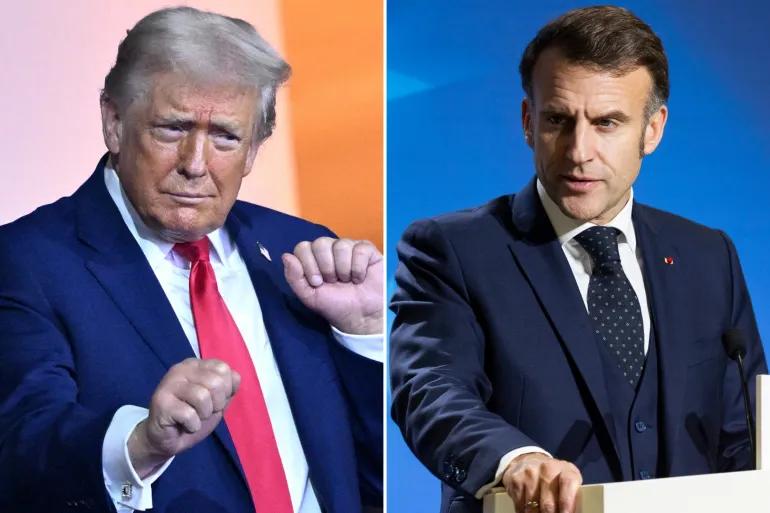
BREAKING: 🚨🇺🇸🇫🇷 Macron urges the EU to activate its anti-coercion tool against the US after Trump’s Greenland tariffs,
a move that could block US banks and tech firms from EU markets.
Raise your hand if you’re against Trump’s Greenland tariffs ✋
Brussels was jolted into emergency consultations today after French President Emmanuel Macron publicly called on the European Union to deploy its powerful Anti-Coercion Instrument (ACI) against the United States, following President Donald Trump’s sudden imposition of tariffs linked to Greenland.
Speaking after an urgent meeting with EU leaders, Macron described the U.S. move as “economic coercion dressed up as trade policy,” warning that Europe could not allow unilateral pressure to go unanswered.
“Tariffs targeting Greenland are not just about trade,” Macron said. “They are a direct challenge to European sovereignty, economic stability, and the rules-based international order.”
What triggered the Clash
The dispute erupted after the Trump administration announced a new package of tariffs affecting goods tied to Greenland’s economy, including raw materials and strategic exports. While Greenland is not an EU member, it is part of the Kingdom of Denmark, placing the issue squarely within Europe’s political and economic sphere.
EU officials say the tariffs appear aimed at increasing U.S. leverage over Arctic resources and shipping routes, a region growing in strategic importance as climate change opens new passages.
The anti-coercion tool explained
The EU’s Anti-Coercion Instrument, adopted in recent years, allows Brussels to retaliate when a foreign power uses trade measures to pressure or intimidate the bloc or its members. If activated, it could authorize counter-tariffs, restrictions on U.S. companies, limits on public procurement access, or financial measures.
Until now, the tool has never been fully deployed.
“This is exactly the scenario the instrument was designed for,” a senior EU diplomat said. “If the EU does not act now, it sends a signal that economic pressure works.”

A California federal judge hit the Trump administration with a scathing order to notify thousands of detained immigrants nationwide that they can join a lawsuit demanding either a hearing or immediate release.

Trump DOJ takes down thousands of Epstein docs after admitting it exposed victims

The Department of Justice was reportedly caught deleting evidence that sex trafficker Ghislaine Maxwell was in possession of three interviews that could possibly be used as blackmail over President Donald Trump and were not released to the general public.

Trump owes the Supreme Court an apology—to the Justices he smeared on Friday and the institution itself. He doubtless won’t offer one, but his rant in response to his tariff defeat at the Court was arguably the worst moment of his Presidency.

Former President Bill Clinton and former Secretary of State Hillary Clinton are in a standoff with House Oversight Committee Chair James Comer, R-Ky., over testimony the panel is seeking in its investigation into the late convicted sex offender Jeffrey Epstein.

Former President Bill Clinton and former Secretary of State Hillary Clinton are set to testify to the House Oversight Committee for its investigation into Jeffrey Epstein, a committee spokeswoman says.

Trump refuses to apologize after posting racist meme of the Obamas

In a rare move, the White House recently took down a racist post from one of President Trump’s social media accounts. Extremism researchers say it fits a pattern of mainstreaming extremist ideas.

Just hours after the federal judges in the Eastern District of Virginia appointed a new interim US attorney to replace Trump loyalist Lindsey Halligan, the administration said he is fired.

President Trump is asking the federal government for billions of dollars in damages, putting his own Justice Department on the spot and creating an unprecedented ethical morass.

A federal judge in Illinois quickly issued a restraining order after the Trump administration slashed more than $600 million in CDC grants
