
CELEBRITY
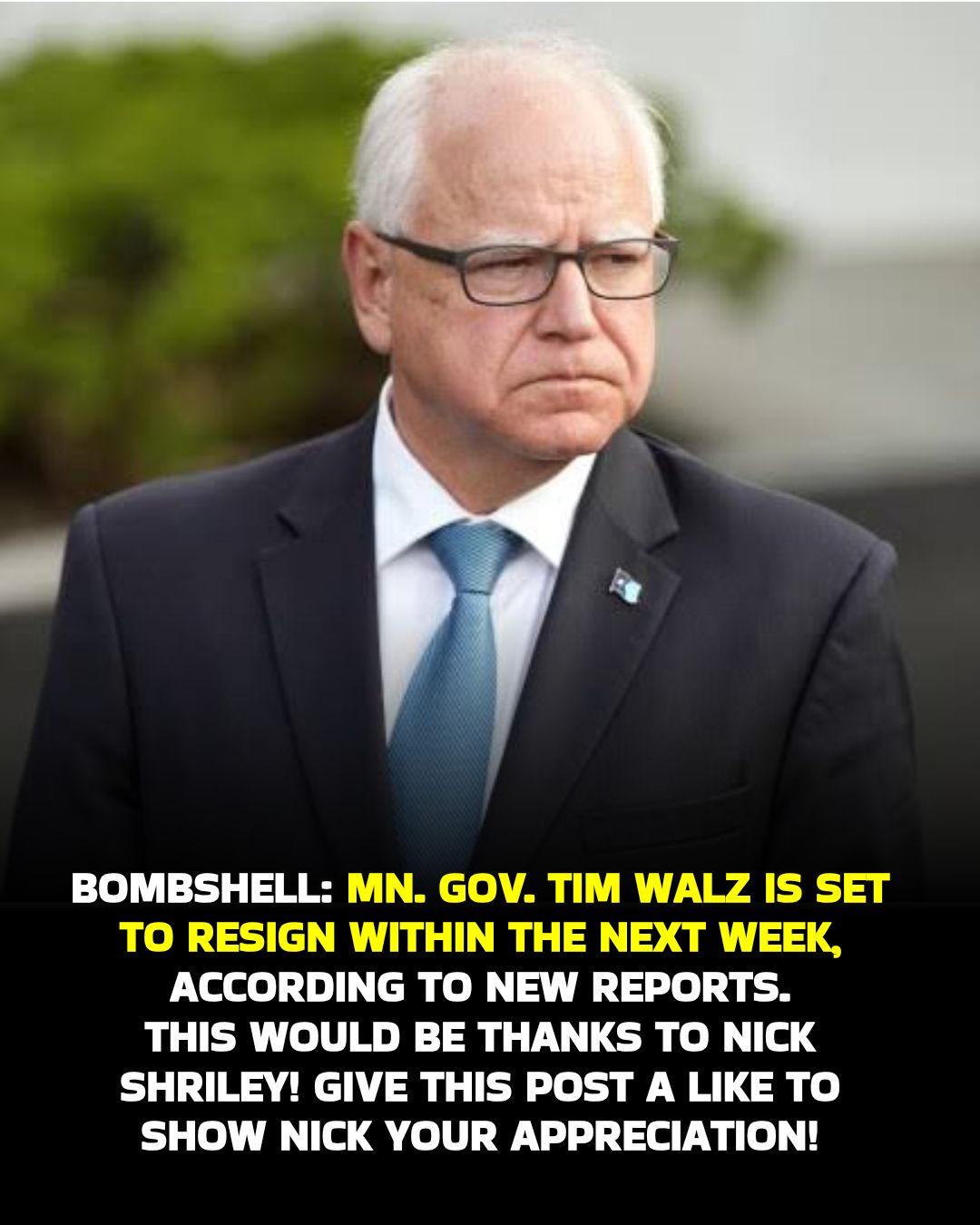
A post circulating from the Republican Party is making an explosive claim — with no confirmed evidence — alleging that Minnesota Governor Tim Walz is set to resign within a week. The post credits activist Nick Shirley as the source of the supposed development and urges followers to smash the like button to show their support, despite no official confirmation backing up the claim.💥💥

It started as just another viral social‑media post — bold, flashy, and impossible to ignore.
On a chilly January morning, thousands of people across platforms were greeted with the same explosive claim: “Minnesota Governor Tim Walz is resigning within a week!” The post, attributed to activist Nick Shirley, didn’t cite any official source or confirmation. Instead, it urged readers to hit the like button “to show support for this historic moment.” 💥💥
The message spread like wildfire, reposted by pundits, fringe pages, and even some mainstream users who assumed it must be true because of how loudly it was being shared. Screenshots of the claim were captioned with shocked emojis, capital letters, and hyperbolic predictions about the collapse of Minnesota politics.
But here’s the twist…
The Reality Behind the Rumor
In actual reported developments, Tim Walz — the Democratic governor of Minnesota — did make a major announcement early this month: he ended his bid for a third term in the 2026 governor’s race. This decision came amid intense national scrutiny over a widespread welfare fraud scandal in the state and a viral video that drew conservative criticism of his leadership.
However — and this is crucial — Walz has not announced a resignation from office. He remains governor through the end of his current term, which lasts until January 2027. Calls for his resignation have indeed come from some Republican lawmakers frustrated by the fraud controversy, but there is no confirmed evidence he plans to step down imminently.
Despite this, the social‑media post in question cast Shirley — known for producing viral political content — as the “source” of the supposed resignation. Users widely shared it without any official update from the governor’s office, his spokesperson, or Minnesota’s state government.
How the Story Snowballed
Over the next 24 hours, the post:
Was reshared by political influencers claiming insider knowledge.
Became fodder for polarizing commentary across X, Facebook, and message boards.
Was repeated as fact in some echo chambers despite no source verification.
Journalists and fact‑checkers began debunking the claim, noting that:
Walz has only ended his campaign for a new term, not his current governorship.
No official Minnesota government announcement supports a resignation within days.
The only “evidence” cited in the viral post was the unverified social media statement credited to Shirley.
As one local news outlet put it, the rumor was a classic example of a political claim amplified far beyond its evidentiary basis — a post designed for engagement rather than accuracy.
Why It Matters
This incident underscores a larger truth about today’s information ecosystem: viral posts can create headlines faster than facts can keep up. Even when a political figure is under pressure, speculation and sensational claims can outpace verified reporting. That’s why it’s always important to check official statements or credible news sources before taking trending posts at face value.

A California federal judge hit the Trump administration with a scathing order to notify thousands of detained immigrants nationwide that they can join a lawsuit demanding either a hearing or immediate release.

Trump DOJ takes down thousands of Epstein docs after admitting it exposed victims

The Department of Justice was reportedly caught deleting evidence that sex trafficker Ghislaine Maxwell was in possession of three interviews that could possibly be used as blackmail over President Donald Trump and were not released to the general public.

Trump owes the Supreme Court an apology—to the Justices he smeared on Friday and the institution itself. He doubtless won’t offer one, but his rant in response to his tariff defeat at the Court was arguably the worst moment of his Presidency.

Former President Bill Clinton and former Secretary of State Hillary Clinton are in a standoff with House Oversight Committee Chair James Comer, R-Ky., over testimony the panel is seeking in its investigation into the late convicted sex offender Jeffrey Epstein.

Former President Bill Clinton and former Secretary of State Hillary Clinton are set to testify to the House Oversight Committee for its investigation into Jeffrey Epstein, a committee spokeswoman says.

Trump refuses to apologize after posting racist meme of the Obamas

In a rare move, the White House recently took down a racist post from one of President Trump’s social media accounts. Extremism researchers say it fits a pattern of mainstreaming extremist ideas.

Just hours after the federal judges in the Eastern District of Virginia appointed a new interim US attorney to replace Trump loyalist Lindsey Halligan, the administration said he is fired.

President Trump is asking the federal government for billions of dollars in damages, putting his own Justice Department on the spot and creating an unprecedented ethical morass.

A federal judge in Illinois quickly issued a restraining order after the Trump administration slashed more than $600 million in CDC grants
