
CELEBRITY
Supreme Court Delivers Major Blow to Trump’s Tariff Agenda in Landmark 6–3 Decision

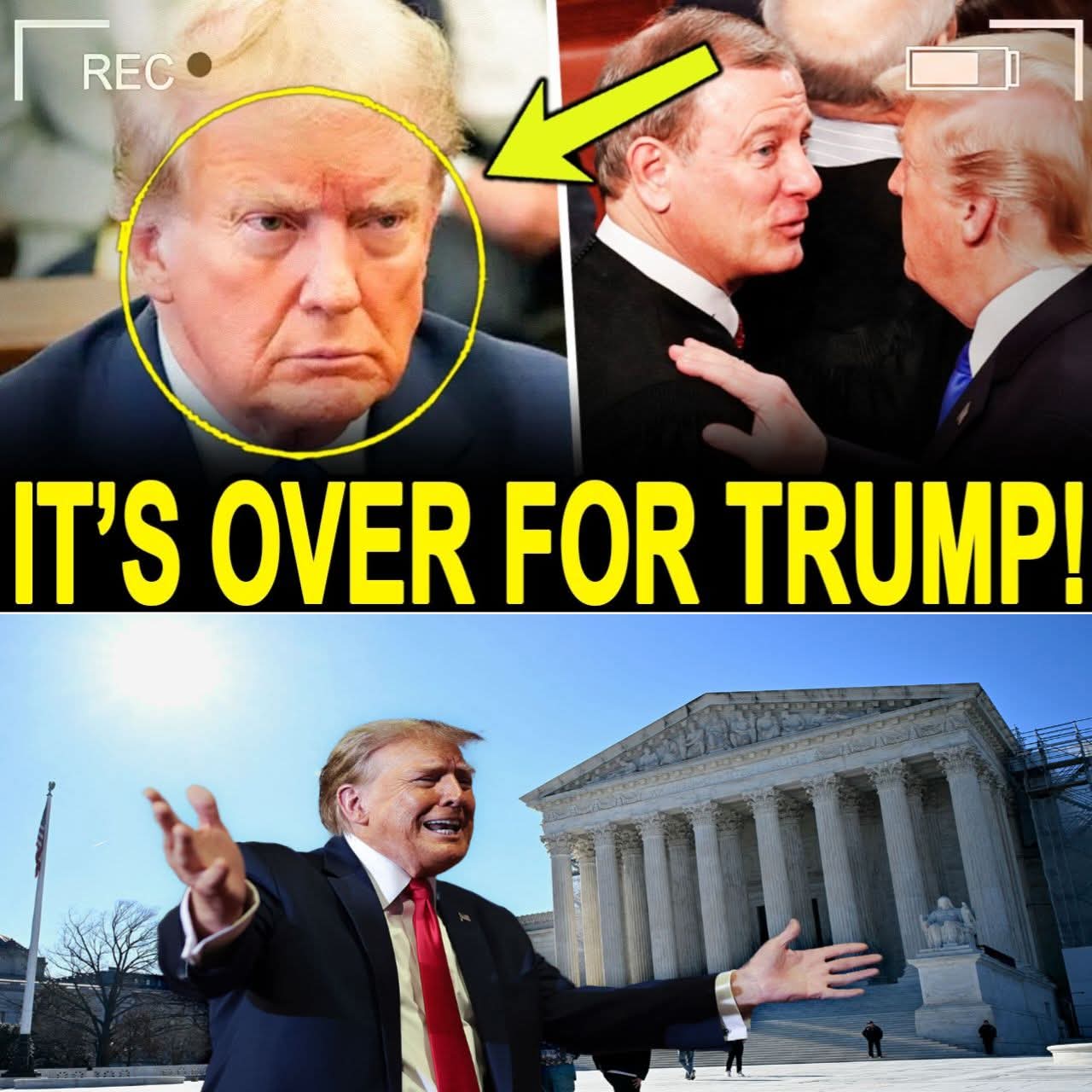
In a stunning decision that could reshape presidential power for years to come, the Supreme Court of the United States ruled 6–3 that Donald Trump illegally used emergency authority to impose sweeping global tariffs under the International Emergency Economic Powers Act (IEEPA). The ruling marks one of the most significant legal setbacks to Trump’s economic agenda and sends a powerful message about the limits of executive power.
Chief Justice John Roberts authored the majority opinion, stating that the Constitution gives Congress — not the president — the authority to impose taxes and tariffs. The Court concluded that IEEPA does not provide presidents with unlimited power to tax imports simply by declaring a national emergencies
The decision centered on Trump’s aggressive tariff policies, which targeted imports from countries around the world and became a cornerstone of his “America First” economic strategy. The Court ruled that such sweeping economic actions require explicit authorization from Congress, especially when they carry massive national and global consequences.
At the heart of the ruling was the “majo
r questions doctrine,” a constitutional principle that says presidents cannot claim broad new powers from vague wording in federal law. The justices argued that if Congress intended to hand over enormous tariff-setting authority to the executive branch, it would have stated that clearly.
The ruling instantly invalidates large portions of Trump’s tariff regime and could open the door for businesses to seek billions of dollars in refunds for duties already paid. Analysts say the financial consequences could be enormous, especially for import-heavy industries that spent years absorbing the costs of the tariffs.
The decision also revealed deep divisions within the Court itself. Conservative Justices Neil Gorsuch and Amy Coney Barrett joined the liberal justices in the majority, while Justices Clarence Thomas, Samuel Alito, and Brett Kavanaugh dissented.
Legal experts are already calling the case a historic turning point for constitutional law and separation of powers. The ruling reinforces the idea that even during national emergencies, presidents cannot bypass Congress on major economic policy decisions.
Although Trump may still pursue tariffs through other legal mechanisms, the Court’s decision sharply limits his ability to act alone. Going forward, any major trade action will likely require stronger congressional backing — a reality that could dramatically reshape the future of U.S. economic policy.

Supreme Court Delivers Major Blow to Trump’s Tariff Agenda in Landmark 6–3 Decision

Trump’s Iran Defense Sparks Fierce Backlash as Critics Question His Fitness for Office

JUST IN: Zelensky just bluntly accused JD Vance of actively helping Russia by trying to kill US military aid, warning that cutting off Ukraine fundamentally weakens America. 🇺🇦🇺🇸🇷🇺⚔️

Kylie Kelce Breaks Down After Wyatt’s Heart-Melting Message for Auntie Tay 💔💖

Taylor Swift and Travis Kelce Just Stole the Spotlight with an Early Kentucky Oaks Arrival—But One Odd Detail Has Everyone Confused.

Taylor Swift and Travis Kelce Spark Emotional Frenzy With Surprise Live Reveal That Left Fans Speechless

THIS WILL BE MY FINAL TOUR” — Taylor Swift’s Announcement Leaves Fans Speechless 💔 Six words. Simple yet heavy, they hit like a note you never expected to hear.

Get ready to have your heart stolen — again! NFL Legend Jason Kelce BEAMS with pride and MELTS the Internet as 7-Month-Old Baby Finnley Tugs, Twists, and Giggles at Dad’s Iconic Beard in the Most Adorable Father-Daughter Moment Ever! The Cutest Father-Daughter Moment You’ll See All Week — Fans everywhere are swooning over the Kelce family charm. Between Jason’s beard, baby Finnley’s irresistible laughter, and the undeniable love radiating from the clip, this moment has officially broken the internet — for all the right reasons. 💕Tap to Watch the Video Everyone’s Obsessing Over! 📲✨

Kylie Kelce had a funny yet honest critique for her husband Jason Kelce after their daughter Wyatt returned home from a solo golf outing with Dad.

Taylor Swift Charms Fans with Sweet Glimpse of Kylie Kelce’s Creative “Work Corner” During Pennsylvania Visit

Congratulations, Jason! Kylie Shares an Ultrasound Confirming they are expecting Child: The ultrasound shows the baby’s face and tiny heartbeat as the couple embrace in pure joy and reveals baby gender 😊
